
The Voyage South
Fleeing the Fog: A travelogue of our journey from England to Spain by car

This will likely be a shortish post to wish my readers a healthy and prosperous new year as we stumble forwards into 2025 and whatever absurdities it may bring. Having spent the last five days driving to Spain from our home in Cornwall, I’ve had plenty of time to think as the motorway kilometres clicked by. We set off the day after Boxing Day on a grey and gloomy morning, nudging our way eastwards through the numerous roadworks, traffic jams and generally over-complex and dilapidated road system of England. A dense fog descended as we entered Devon, causing a five-car pileup that we narrowly avoided. The fog would stay with us all the way to the border of Spain, four days later.
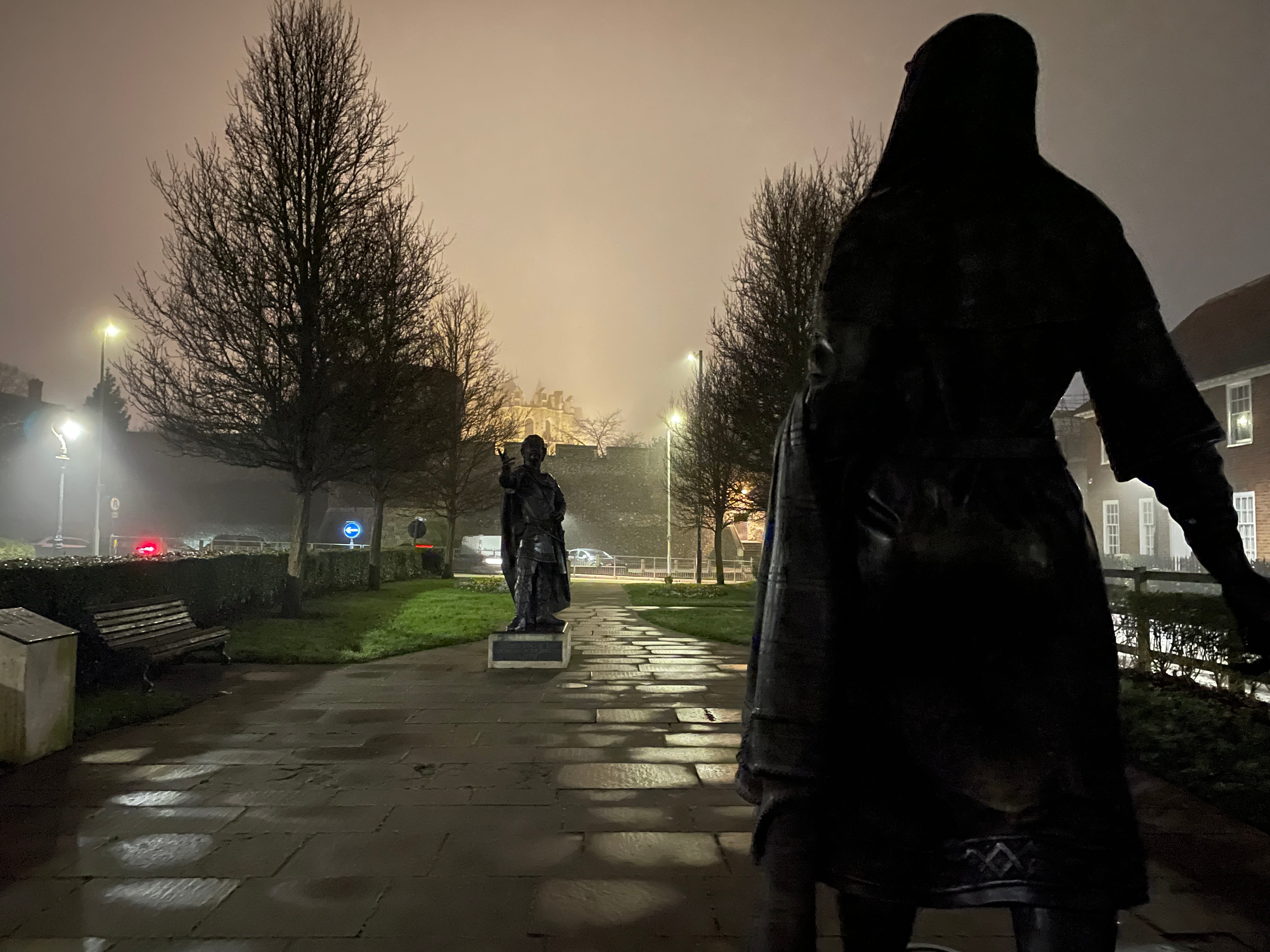
Our first night was spent in Canterbury at the unlovely Chaucer Travelodge, a resting place for modern-day pilgrims and sited within a long stone’s throw of Canterbury Cathedral, one of Christendom’s most venerated sites in England. Aside from having the worst breakfast I’ve ever encountered, the motel is famed as the final residence of Mary Tourtel (1874 - 1948), whose Rupert Bear character furnished my childhood with his wholesome, if somewhat boring, stories. They allow dogs at the Chaucer Travelodge, so we sat in our room and ate a Thai takeaway while Storm looked on mournfully, no doubt wondering what foolish escapade we were embarking upon. Outside, the mist swirled like something from a horror movie and I took him out for a night pee in Lady Wootton’s green, where he growled at the statues of King Ethelbert and Queen Bertha which loomed darkly.
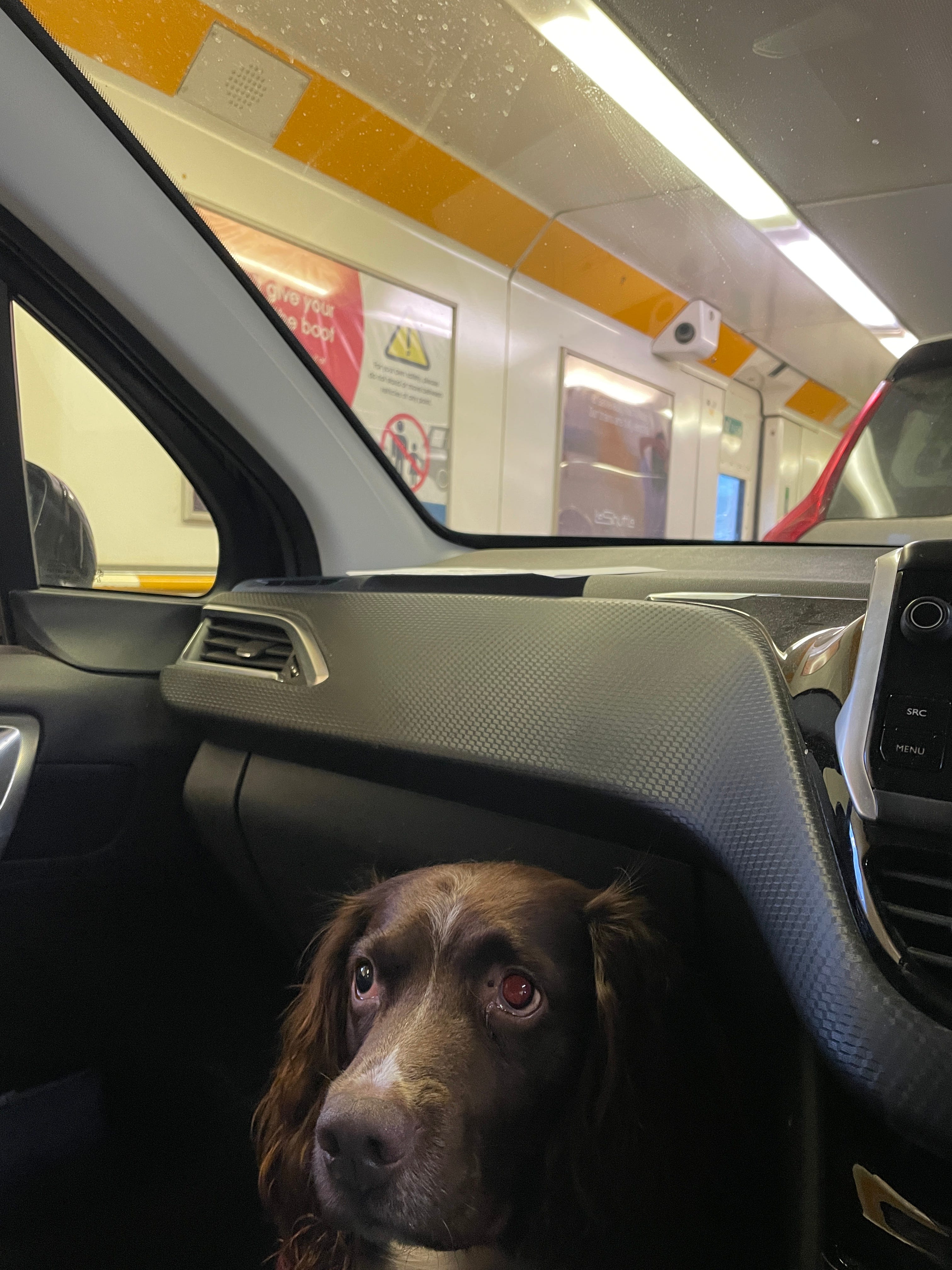
Very early the next morning we drove to Folkestone and the Channel Tunnel, or Le Shuttle as it’s been rebranded. Getting Storm through the border controls with his Spanish passport was a breeze. I really need not have spent the previous month worrying about it. We had been given a Spanish (Catalan, even) passport for him from a kindly Spanish vet the previous year, meaning we didn’t have to pay the extortionate animal health certificate fees the EU demands of British non-human citizens. Afterwards, we drove onto the train and went under the sea to France.
At Calais, there was a brief flash of sun, lifting our spirits momentarily. However, the dreaded fog soon returned, and with it a horrible cloying mucus at the back of my throat, that proved unshiftable and uncomfortable. What’s more, the outside temperature was stuck at zero or a couple of degrees below, turning the fog into freezing fog. Much of the day was eaten up driving through the solemn blankness of northern France, passing through the Somme region and other areas notable for past slaughters. The roads were very quiet, and we hummed along with the fog lights on. On a few occasions I noticed what looked like dead cats at the sides of the road, and I soon realised they were in fact huge rats. We briefly got lost as we passed through Rouen, and glimpsed the morbid cathedral shrouded in mist with its needle like spire - probably the last thing Joan of Arc saw as the flames rose to her Roman nose.
We were aiming for La Rochelle, on the west coast of France in Charente-Maritime, and got there in good time for dinner having outwitted the satnav, which had taken us down a horrific two-lane ‘road of the dead’ through salt marshes the last time we came this way. I call it that because it is an inherently dangerous road, with impatient speeding cars and trucks, and deep ditches on each side of the narrow carriageway. Plenty of roadside shrines attest to its victims. The satnav’s chirpy female voice implored us to turn off at least a dozen times onto the Route de Mort, then telling us to turn around several times, before finally falling silent into a kind of electronic sulk. We had a nice glossy road atlas of France, purchased last year when we’d had to thread our way through the country on minor roads due to the nationwide farmers’ strike. At the time, most motorways had been barricaded by tyre-burning farmers. It served us well then, and it allowed us to outwit the satnav this time.
La Rochelle, which has historical associations with the Knights Templar and the Hugenots rebellions, is a pretty coastal city packed with medieval and Renaissance buildings. Our Novotel - an ugly concrete block - wasn’t one of them, but the friendly staff upgraded us to a top-floor suite for only a few extra euros, and we had a nice view of the foggy car park below. I experienced a wave of nostalgia, as I’d once spent three months living in La Rochelle immediately after university and the death of my mother in 1993. My dad, with his industry connections, had got me a job in the Alsthom train factory and I spent a reflective summer working in the site office translating orders for train parts from and into English. It had been a boring job, but I enjoyed living the French lifestyle, and made a few friends.
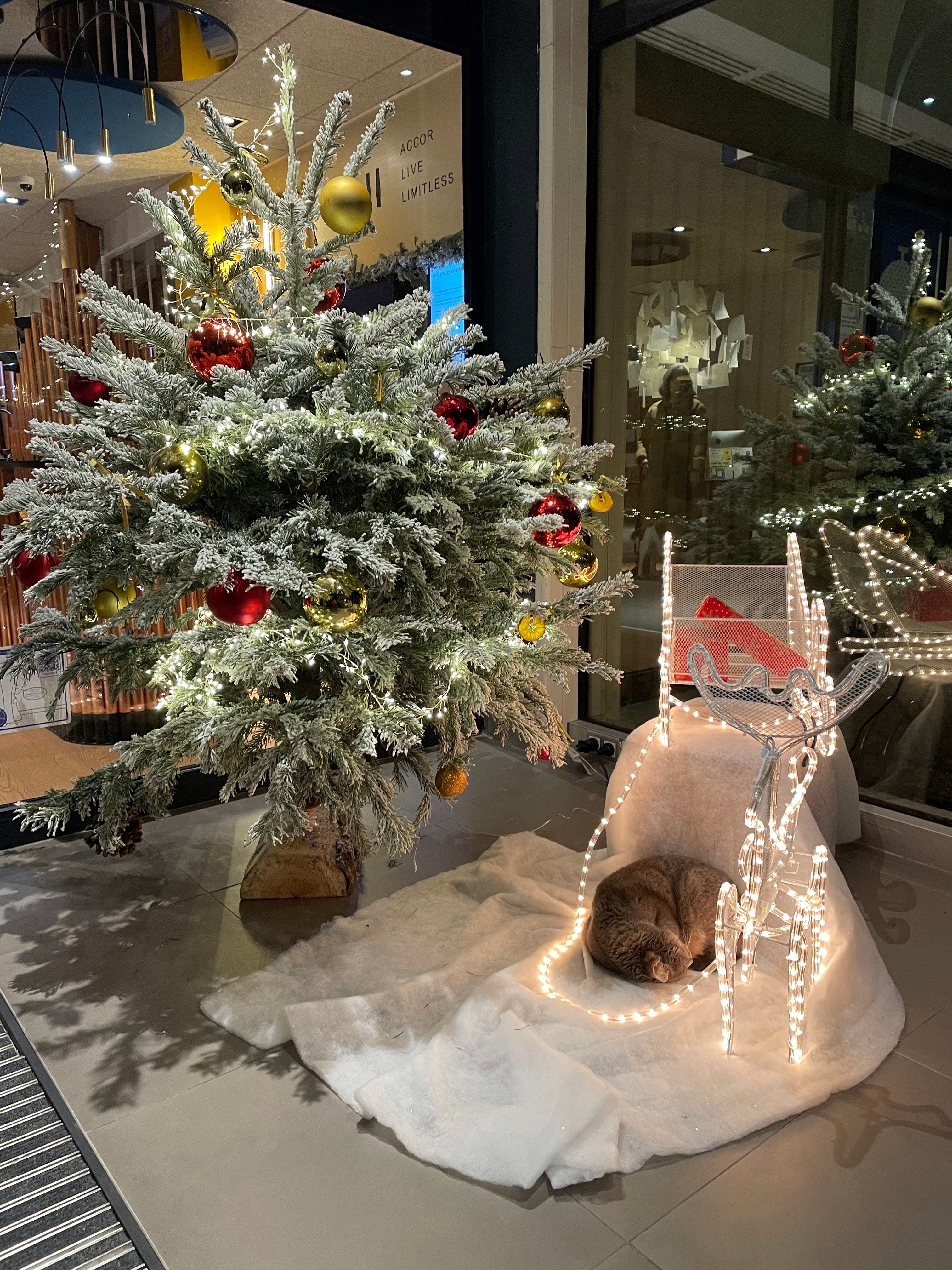
During my time in La Rochelle, at weekends I used to ride my bike across the bridge to the nearby Ile de Ré, a flat island dotted with bucolic fishing villages, oyster farms and ruined medieval abbeys. We returned this time and spent a happy day walking along its long sandy beaches and eating raclette sandwiches in Saint-Martin, a harbour village protected by immense fortifications. Later, we returned for moules-frites (mussels and chips) in La Rochelle’s old harbour, and planned the next day’s drive. My throat issue still hadn’t gone away, meaning I croaked like a frog when speaking to the waiter (no pun intended). Returning to the hotel, I noticed the staff had given a home to one of the local homeless cats (who only had half a tail), who would wait patiently for humans to open the automatic doors as he was too small to trigger the sensors.
The next day we drove south again, immediately encountering that cold, clammy fog that seemed to seep into the car and into our bones. This kept up for most of the day until we passed Toulouse and I got the feeling we would soon be free of the foul miasma. I wasn’t wrong. A road sign announced we were entering the “Land of the Cathars”, and as we passed Carcassonne - where most of the Gnostic sect had been put to death by the Inquisition - the fog suddenly lifted and we found ourselves in a panorama of warm, sunny hills studded with olive trees and Mediterranean pines. As if by magic, my throat cleared in the space of ten minutes. Hallelujah! [Side note - is this bizarre fog entirely natural? Answers on a postcard.]
As we made our way down towards the littoral to the east of the Pyrenees, the temperatures rose in line with our spirits, increasing from a bone chilling 2C to a balmy 15C. We passed into Spain in the late afternoon, and by the time we skirted Barcelona the sun was an orange ball setting in the west behind the mountains. Our destination was the hilltop village of Altafulla, just north of Tarragona, a gem of a place that we stumbled across last year. Lizzie’s place is an old converted animal corral almost butting up against the walls of the monastery. To get in, there’s an ancient wooden door, behind which is cave bar, where Lizzie greeted us. We’re staying above the bar, and can look down into its courtyard. Dinner was a tin of albondigas (Spanish meatballs), some crusty bread and a bottle of Bordeaux that I’d picked up in a Texaco garage near, well, Bordeaux.
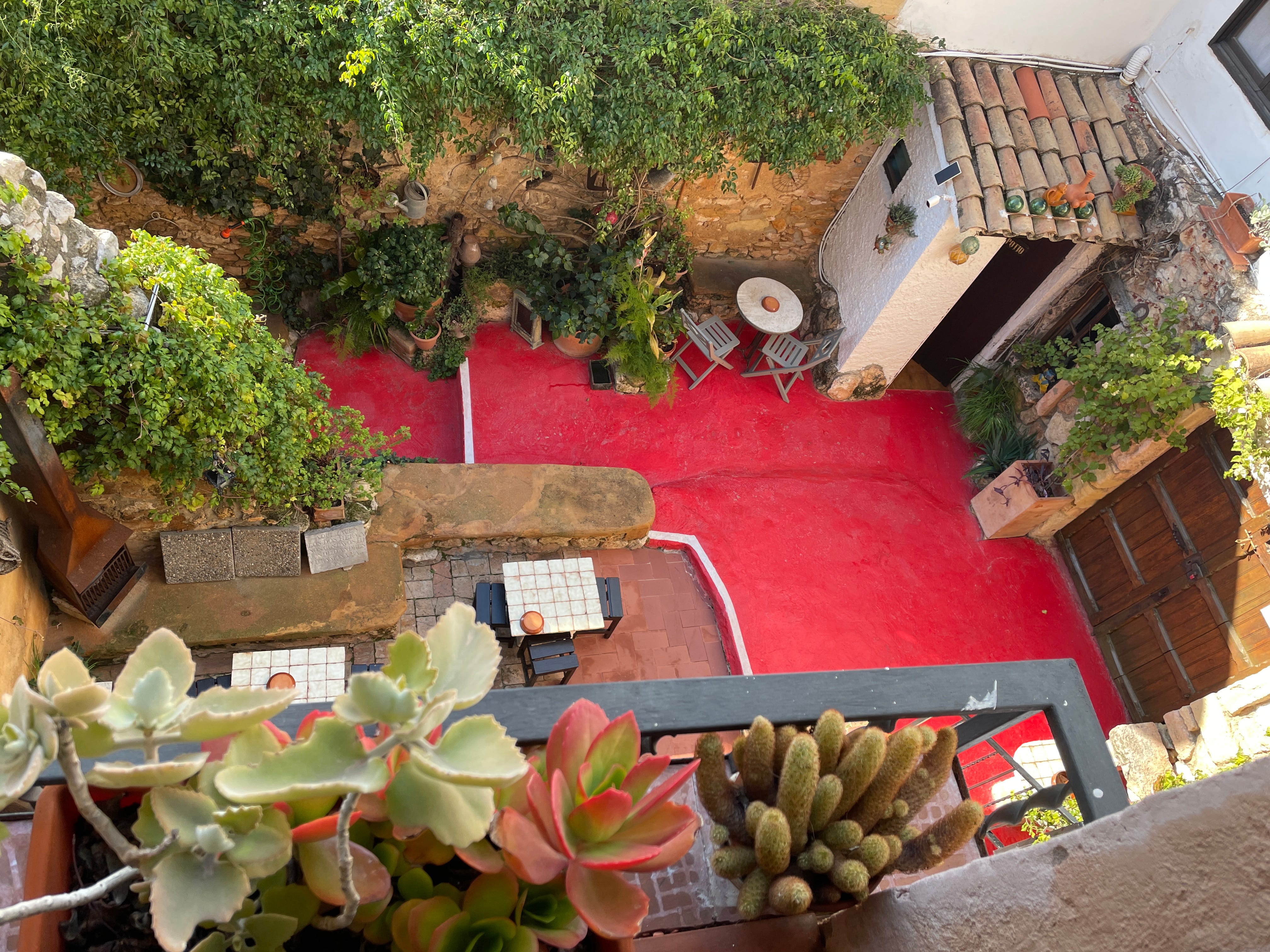
I’m now sitting here in our piso, listening to the church bells chime outside and letting the serene feeling I get whenever I’m in Spain seep into me. There’s a faint scent of olive wood smoke hanging in the crystal air as the sun beats down on the tiled roofs. We have a few days repose here before continuing our journey south to Andalcia, where we’ll spend most of the winter. Luckily for me, I have a boss who doesn’t much care where I’m located so long as I do the work set for me, and Michelle is similarly flexible in her NHS job since she was fired for not taking the you-know-what four years ago and now works through an agency where she can select her shifts to suit. Decamping to where we used to live in Spain is actually a cheapish solution for us, as it’s much cheaper to be here than England, and we don’t have to spend money on heating.
Anyway, seeing as it’s a new year, I have at least one resolution: to write more. As my paid job as a copywriter involves a lot of key tapping behind a screen, I have often struggled to find time to write blogs like these. But all that is changing as I’ve taken a step down in seniority and am now under less pressure than I was. This gives me more headspace and more focus, and to kick off the new year I’m planning to write a series of blog posts around the theme of what I used to write about a decade ago - the challenges we face as our industrialised way of life falls apart at the seams, and how we can respond to it and regain our sovereignty. I’m really looking forward to getting back into this - watch this space.
On that note, I’d like to wish you all a happy new year and a positive 2025 - salud!
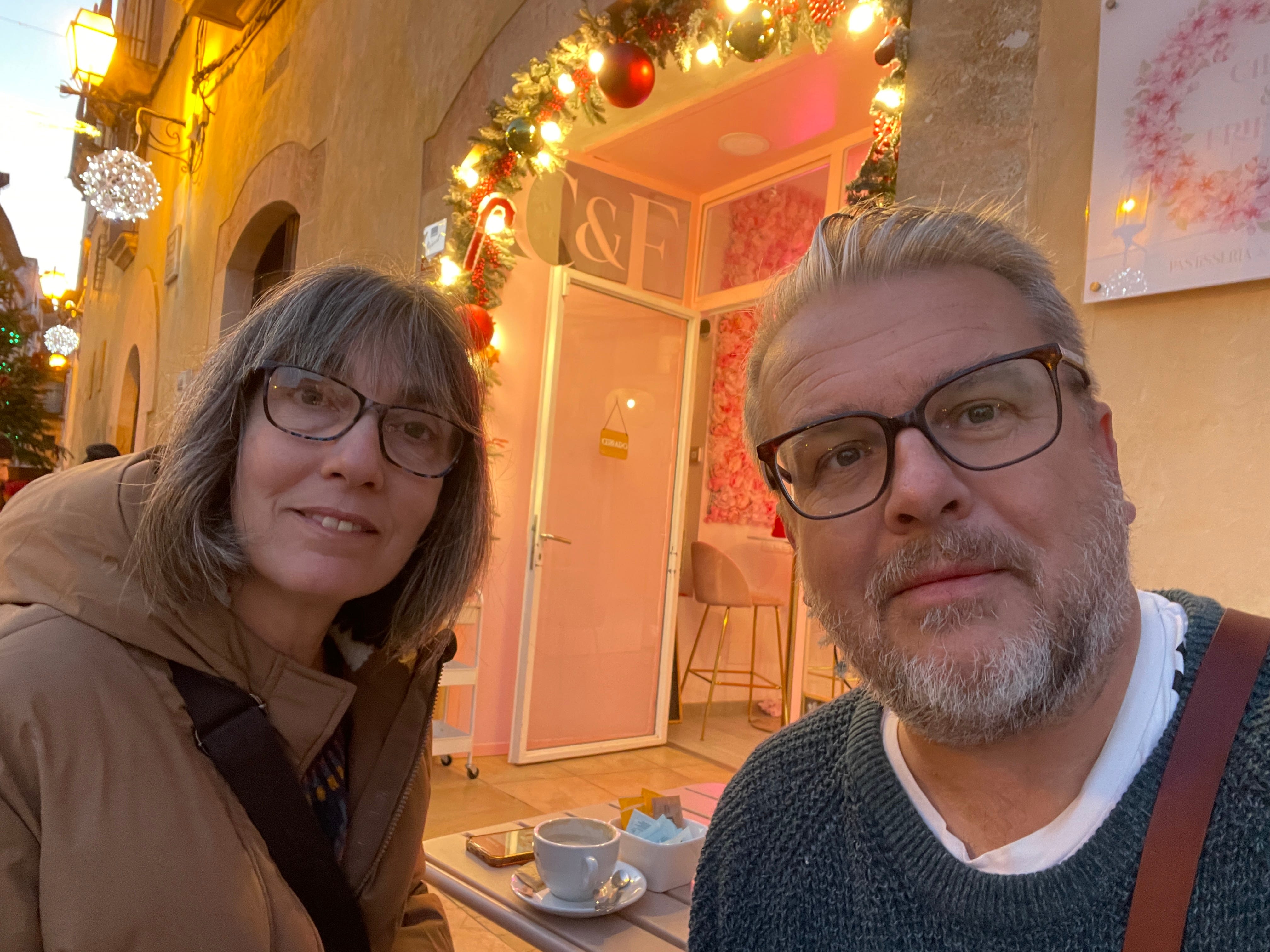
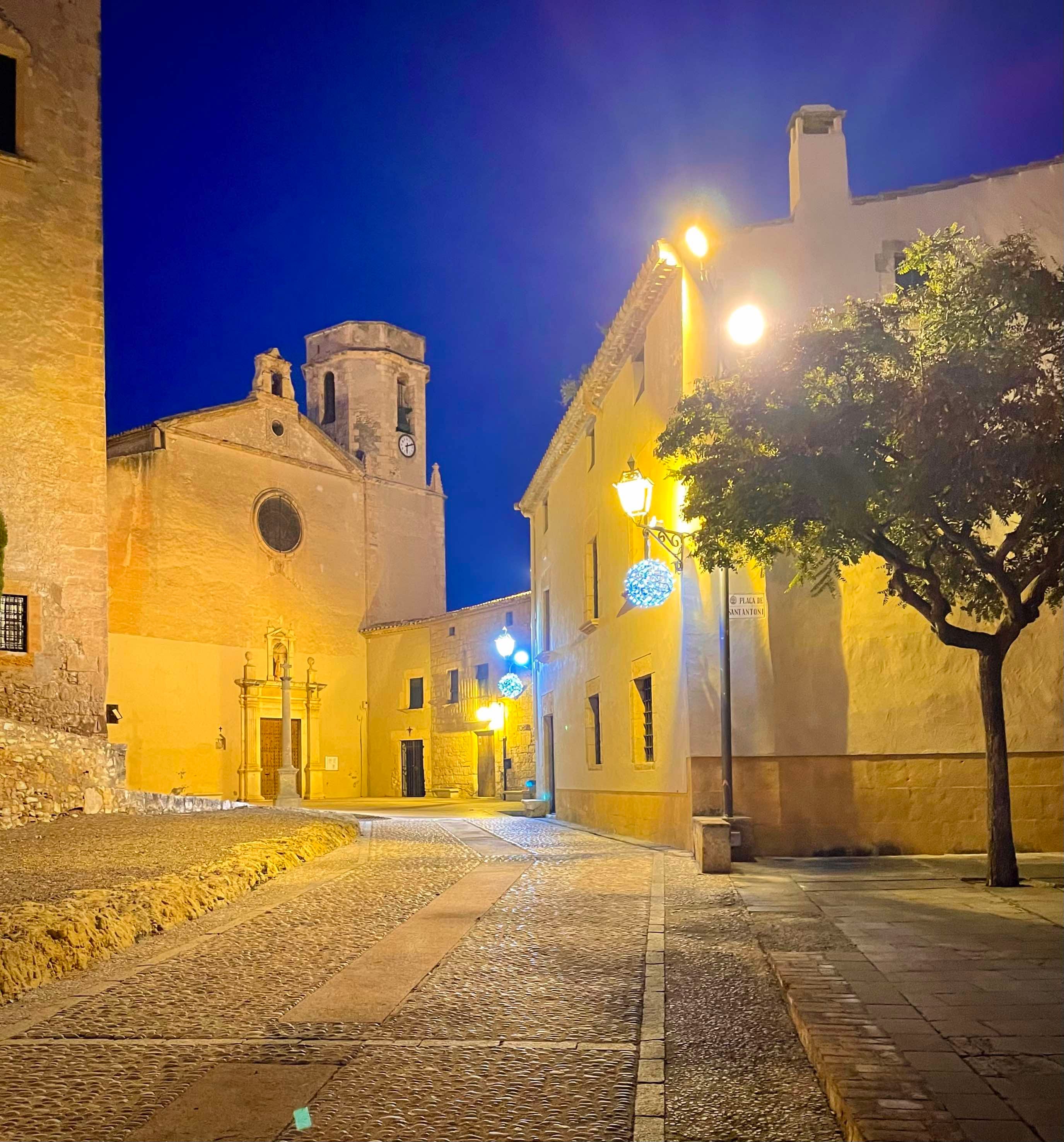
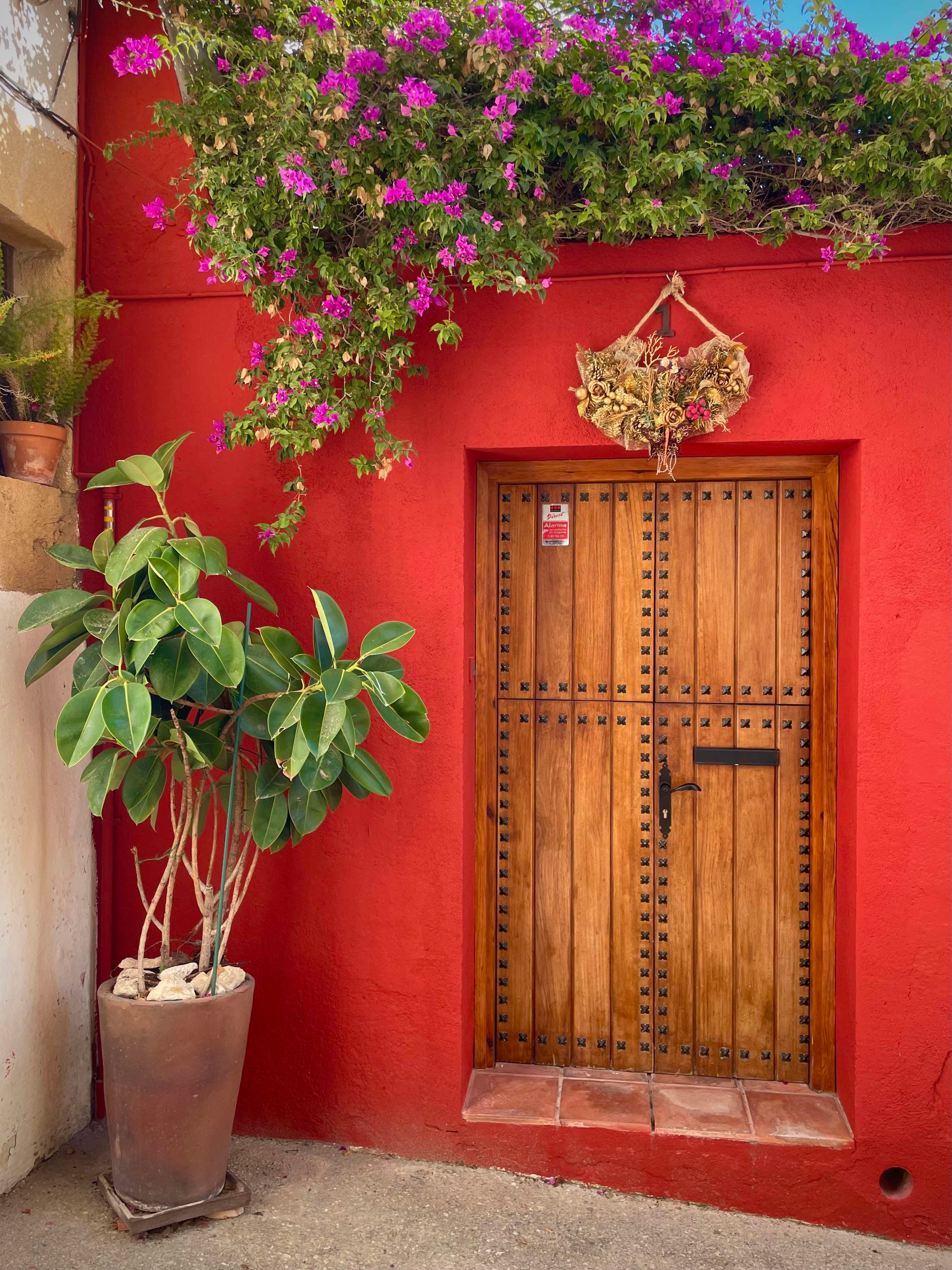
And a few more pics from Altafulla, where we are now.
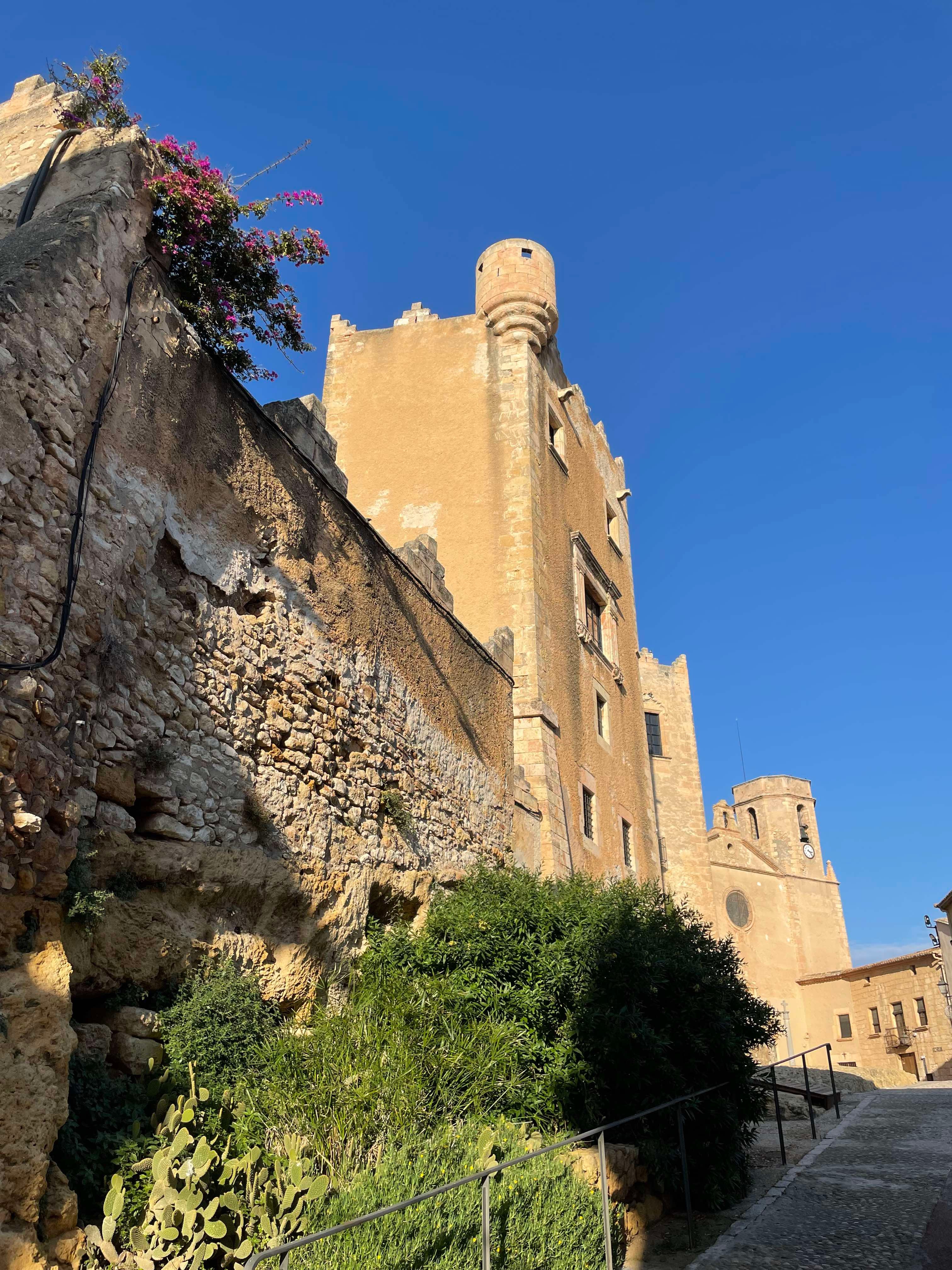
Finally, thanks to AngieC who tipped me for my last post. Always appreciated!
Thank you for the well-wishes, and I'd like to wish you and yours as well as the other readers here a very happy and productive New Year too.
I did have to smile at the idea of 2C being "bone-chilling", since it's -13C outside my kitchen window right now. Still, I'll take proper winter over slush any day. The old-timers around here all tell me this part of Norway used to get weeks of -30 every year, but these days it's rare for it to go much past -10.
Andalucia in winter does sound lovely. I've only been to that part of Spain once, but I agree it has a sense of soul and history to it. And of course Spanish towns and cities in general tend to be much more pleasant and easier on the eyes than most Scandinavian ones, and probably many British ones too. Sometimes I've been thinking that living in a climate with better growing seasons and no need for heating would make more sense in the face of the deindustrial future. Then again, I don't think I could deal with 40C summers, and the lack of water is of course a huge problem. I'd also rather not have to get used to living my whole life in a new language and culture, but kudos to those who're up to the challenge. Maybe if I could go to tropical Australia or something, but there we have the little issue that they're not exactly keen on people just turning up to stay, not even other Westerners.
Anyway, glad to hear you're doing well on the whole, and looking forward to seeing more of your writing here.